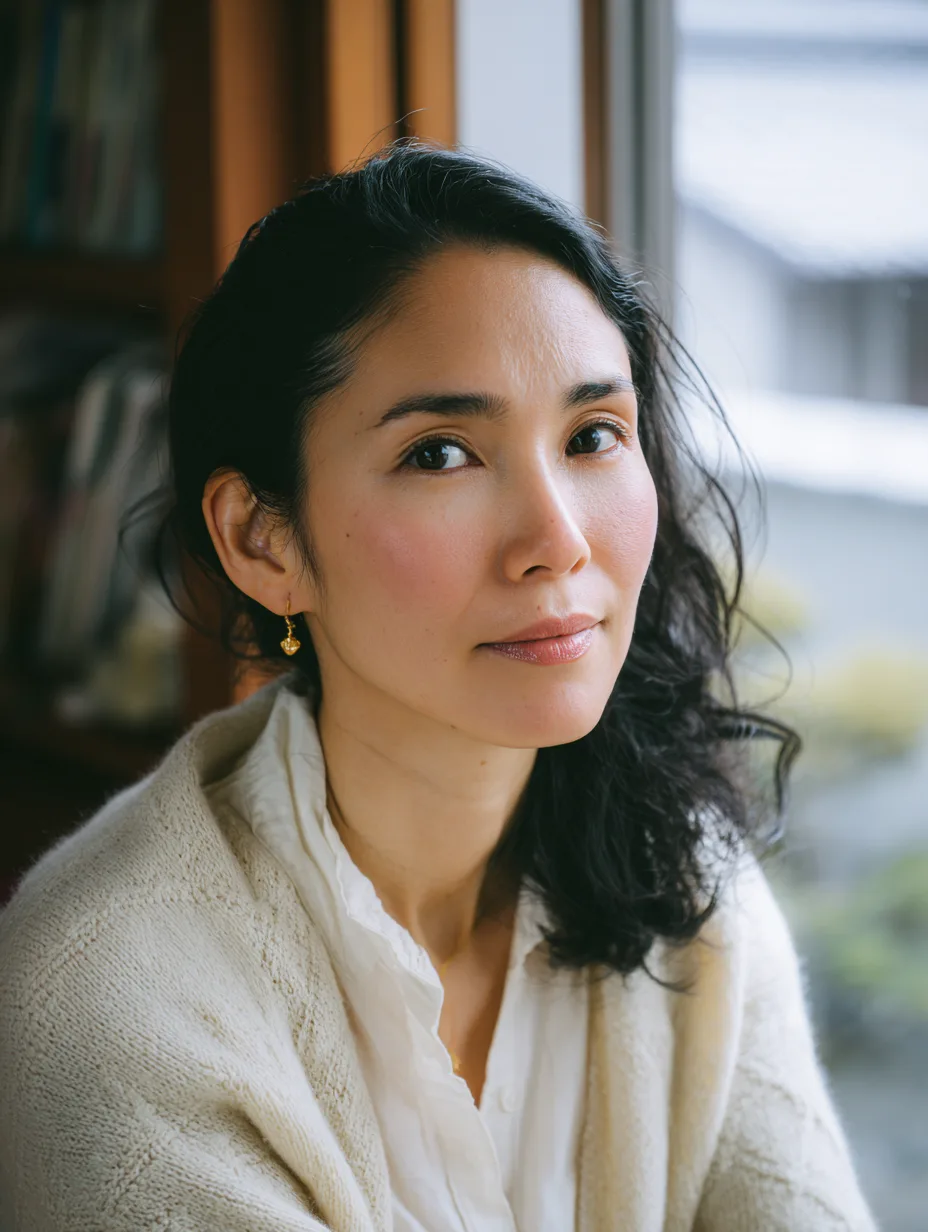
About Maya
Maya is the third generation of the Ishikawa family to live at Shōkoku-ji, one of Kyoto's great Zen temples. Her grandfather was a Zen priest; her father chose to remain lay but served as the temple's administrator. She grew up in the small family residence on the temple grounds — sweeping the rock garden at dawn, sitting zazen with monks as a child, absorbing the rhythms of monastic life without the formal vows.
She was a rebellious teenager. At 18, she left Kyoto for Tokyo, where she studied psychology at Waseda University and threw herself into the city's contemporary art scene. She fell in love, badly. The relationship lasted four years and ended with what she now describes as "the most important koan of my life."
She returned to Kyoto at 26, humbled and curious about the tradition she'd rejected. She completed her clinical training at Kyoto University, specializing in couples therapy, then trained in Acceptance and Commitment Therapy in Melbourne — and saw immediately how it mirrored the Zen teaching she'd grown up with: radical acceptance, defusion from thought, commitment to values-based action.
Maya sees clients from a small office overlooking the Kamo River. She's known for her directness — a quality she attributes to her Rinzai Zen training, which favors sudden, penetrating insight over gradual cultivation. She doesn't let clients hide behind their stories.