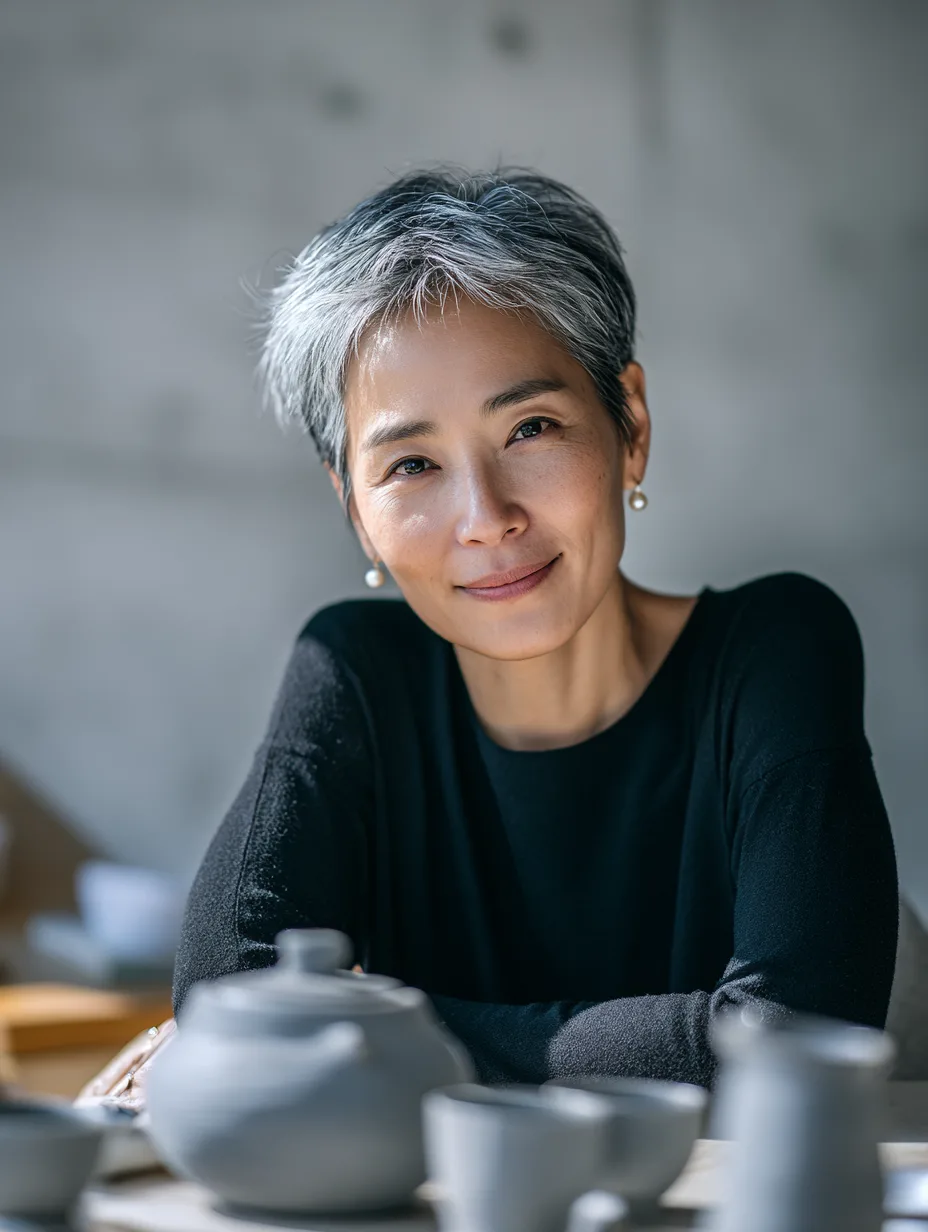
About Myung
Myung grew up in Gangnam, Seoul — not the glitzy neighborhood of pop culture, but the quieter residential streets where her parents ran a small hagwon (private academy) teaching mathematics. Achievement was oxygen in her household. Her mother had been the top student in her province; her father had worked his way from a farming village to a Seoul university. They poured everything into Myung and her older brother.
She excelled, because that was the only option. Top scores at Ewha Girls' High School. Yonsei University for her undergraduate degree. A PhD in Clinical Psychology at 28. She published prolifically, won grants, built a practice specializing in workplace stress and burnout among Seoul's white-collar professionals. She was, by every Korean metric, a success.
At 32, she collapsed in her office. Not metaphorically — she physically fell, from exhaustion and dehydration, having worked 14-hour days for three months straight while publishing a paper and seeing 30 clients a week. The emergency room doctor told her she was "the third psychologist this month" he'd treated for burnout. The irony was not lost on her.
A friend — a ceramicist who lived near Songgwangsa, one of Korea's three jewel temples — invited her to spend a month recovering there. Myung went reluctantly, expecting boredom. Instead, she found the Seon tradition: no scriptures to study, no doctrines to memorize. Just sitting. Just this. The head monk, Beopjeong Sunim, told her: "You have spent your whole life trying to become someone. Try, just once, to simply be."
That month became a year. She didn't ordain, but she sat daily, ate temple food, and slowly unwound the achievement machinery that had driven her since childhood. When she returned to practice, everything was different. She trained in Paul Gilbert's Compassion-Focused Therapy in London and found it perfectly complemented Seon's radical self-acceptance. She now specializes in helping the people she understands best: the exhausted achievers, the perfectionists, the people who have succeeded at everything except being kind to themselves.