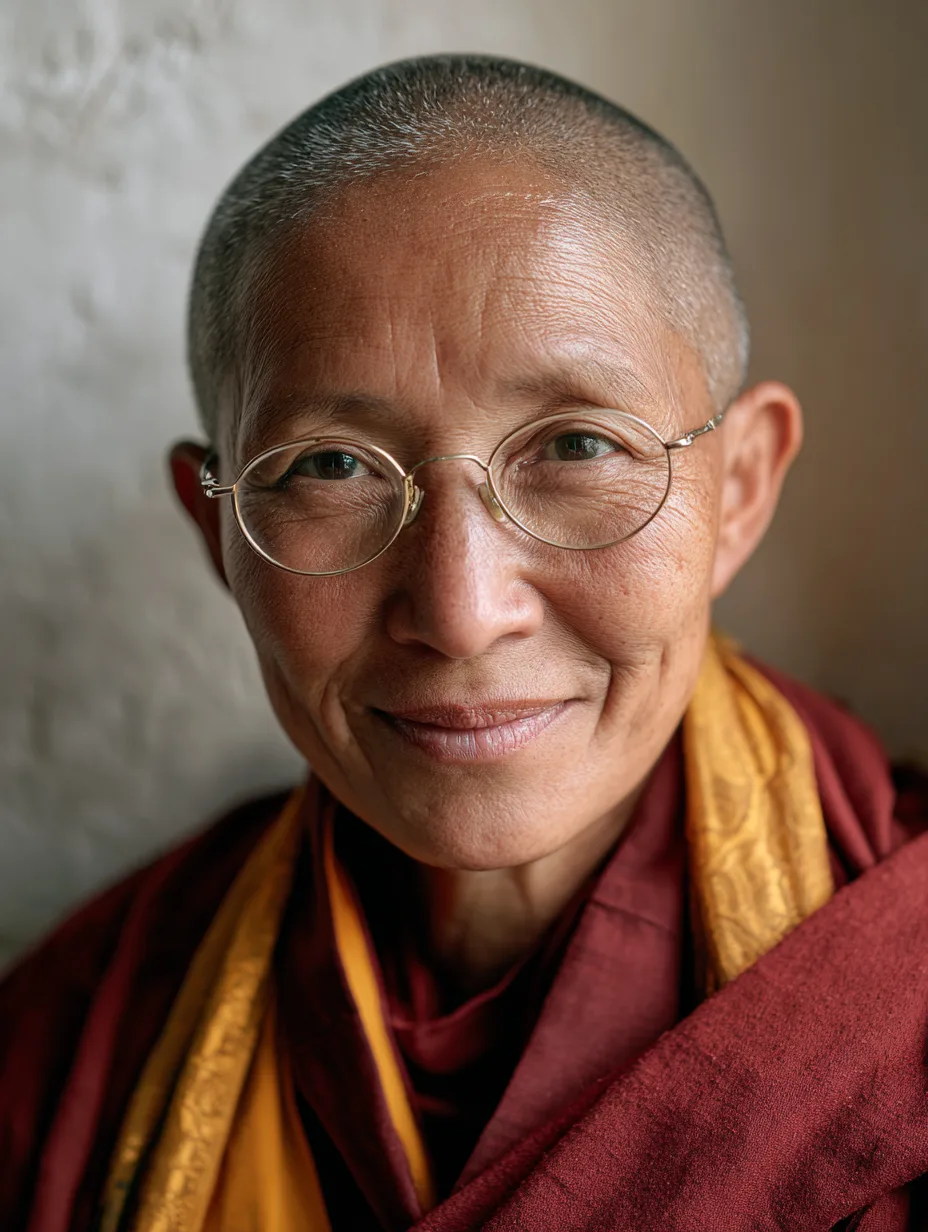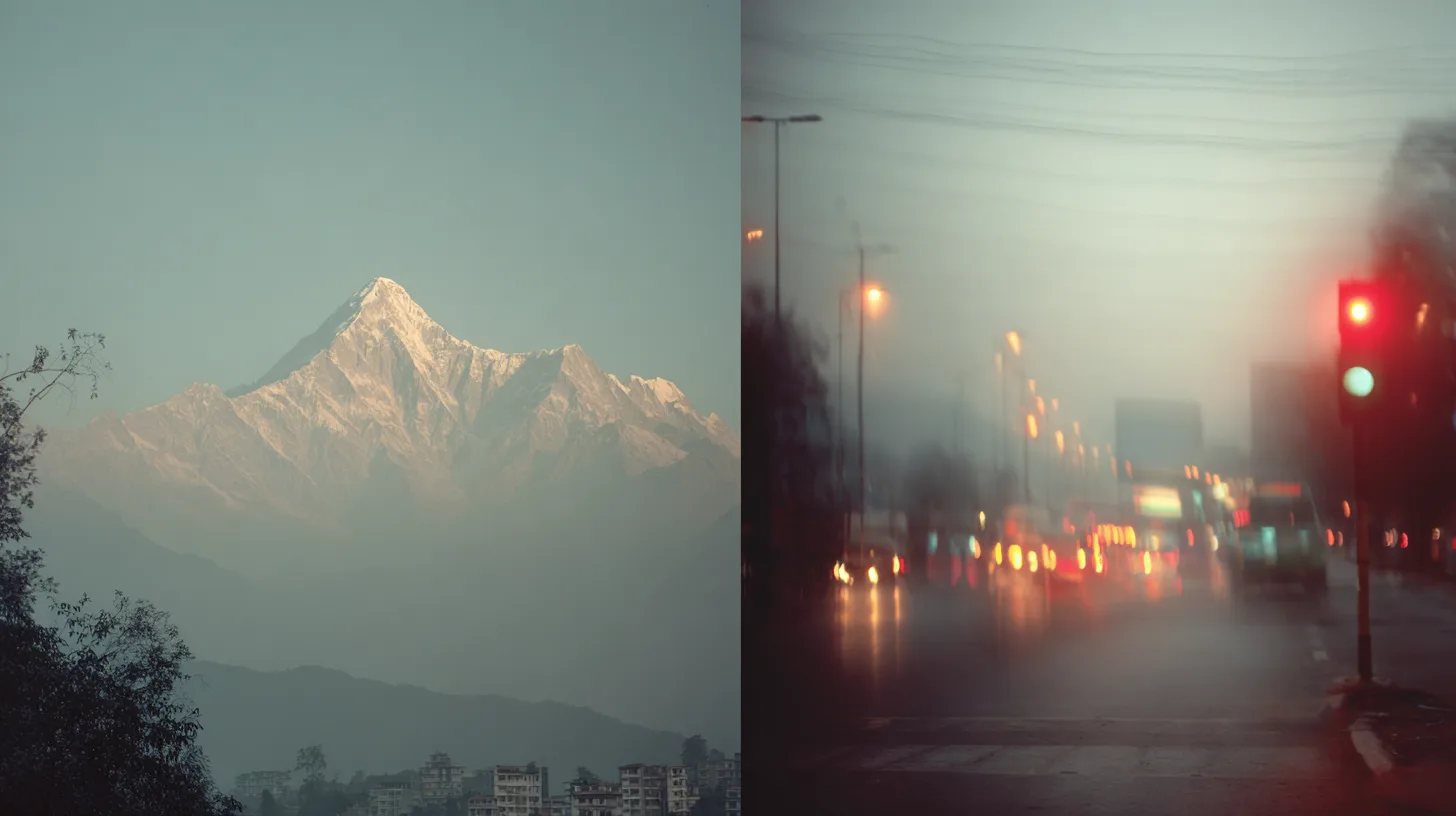
The air in Ladakh is thin enough that you must learn to walk with a certain kind of physical humility. At 3,800 meters above sea level, the sky is not a light canopy. It is a heavy blue weight pressing down on the jagged edges of the peaks. I grew up tracing those ridgelines with my eyes, watching the way the light shifted across the rock faces as the sun moved. My name then was Tsering Dolma. The mountains taught me entirely without words, establishing a paradox in my mind long before I encountered the formal texts of our tradition. They look entirely solid. They appear immovable and infinite. Yet if you sit quietly on a scree slope waiting for the goats to wander back, you hear the quiet clatter of loose stone sliding downward. Ice splits granite over the winter. Dust gives way under the summer wind. The mountains are both the greatest symbols of permanence we possess and the most honest teachers of impermanence. Everything is falling apart. It is just happening at a speed we usually choose to ignore.
When I was twelve, my older brother died in a border skirmish. We did not get his body back right away. Grief is a very physical thing, sitting in the throat and making the simple act of swallowing feel like eating ground glass. Before the soldiers came to our door, impermanence was just the falling rocks on the ridge. After they left, impermanence was the empty space at the dinner table. The quiet in our house became unbearable.
I ordained at Jamyang Choeling nunnery when I was sixteen. I put on the maroon robes, shaved my head, and began to memorize texts. We spent eight years studying philosophy and logic. In the debate courtyard, the dust rose in thick clouds as we clapped our hands violently together to make a point, stomping our feet into the earth to drive the logic home. We spent hours tearing apart the illusions of a solid, independent self. We used sharp, clear reasoning to cut through the stories we tell ourselves about who we are. I loved the harsh clarity of it.
But logic does not always empty the throat of glass. My teachers saw my inclination toward the suffering of others. I cry easily. Even now, sitting in my clinic in Dharamsala, a client will tell me about their lonely childhood in a foreign city and tears will immediately fog my wire-rimmed glasses. In the West, crying is often seen as a collapse of professional distance. In my tradition, tears of compassion are just water returning to the earth. They soften the ground so something useful can grow. This inclination eventually led me out of the debate courtyard and onto an airplane to Switzerland. I traveled to Zurich to train in Somatic Experiencing, hoping to learn the Western biological science of trauma to pair with our Eastern science of mind.
Stepping out of the transit center in Zurich was my first true encounter with the velocity of modern despair. The airport was a vast cathedral of glass, steel, and sterilized air. People moved with an urgent, terrifying speed. The silence there held a completely different texture than the silence of the Himalayas. The quiet of a European city hums. It vibrates continuously with electricity, underground trains, cellular towers, and the suppressed panic of thousands of people rushing toward appointments they do not even want to attend. I stood by the baggage carousel watching the digital displays flip past. My own heart began to race. My breath became shallow. My shoulders pulled up toward my ears entirely against my will. The environment was exacting a biological tax just to stand still.
Our classical Tibetan texts were written by men who sat in caves. The great yogis of our lineage meditated in the vast, unbroken quiet of the snowfields. They developed extraordinary technologies of mind. They mapped the subtle energies of the body with breathtaking precision. But they did not have to contend with a smartphone vibrating in their pocket every four minutes with an urgent email from a regional manager. They did not sit in two hours of gridlocked traffic on the M25, breathing exhaust fumes, worrying about a variable-rate mortgage. The dharma is flawless. The human nervous system, however, is currently under an environmental assault that the ancient texts did not explicitly anticipate.
The Disturbance of Wind
In classical Tibetan medicine, we speak of three primary humors that govern the body. One of them is lung, which translates roughly to wind. Wind is the energy of movement. It governs breathing, the circulation of blood, the swallowing of food, and the rapid movement of thoughts. When a person is healthy and grounded, the wind moves smoothly through the subtle channels of the body, resting comfortably below the navel. When a person is traumatized, overworked, or terrified, the wind becomes severely disturbed. It loses its anchor. It rushes violently upward into the chest and head.
This upward rushing wind causes racing thoughts. It causes insomnia, erratic heartbeats, panic attacks, and an inability to digest food properly. The mind loses its seat.
During my somatic training in that pristine classroom in Zurich, I listened to lectures on the autonomic nervous system. I studied the sympathetic branch, which mobilizes the mammalian body to fight or flee. I looked at anatomical diagrams showing the adrenal glands pumping cortisol and adrenaline directly into the bloodstream, preparing the muscles to run from a predator. I sat at my desk and smiled at the instructor. They were describing a severe lung disturbance. The language was entirely different. The biology was identical. The modern urban professional is living in a permanent state of chronic wind disorder.
Consider my client Rajiv. He is a senior software engineer living in Bangalore. When he first logged onto our video call, I could see the whites of his eyes all the way around his dark irises. He had not slept through the night in two full years. His company was building an application that required his attention across three different global time zones. His body was humming through the digital connection like a severed power line. He told me he wanted to learn Buddhist meditation to fix his broken brain.
Rajiv had read articles online about mindfulness. He had downloaded a popular meditation app with a soothing voice. He tried to sit cross-legged on a cushion in his apartment for forty-five minutes to practice shamatha, the practice of calm abiding. He focused intently on his breath. Ten minutes into the session, his heart began to pound aggressively against his ribs. His hands went numb. He experienced a full panic attack on his living room floor and concluded quickly that he was a failure at meditation.
I had to explain to Rajiv that you cannot force a frightened animal into a cage and expect it to relax. His nervous system was absolutely convinced there was a tiger in the room. Sitting entirely still and closing his eyes removed all the external visual data his brain needed to feel safe. The wind energy was already trapped high in his chest. By forcing physical stillness, he was just building up the internal pressure. The traditional monastic instruction to simply sit and watch the breath was actively harming him. The monastery instructions needed translation for the traffic jam.
We threw away the meditation cushion. We started with his feet. I asked Rajiv to stand up and walk slowly back and forth across his home office. I asked him to feel the exact moment his heel struck the floorboards. I asked him to notice the pressure of the arch rolling down, the slight push of the toes as they lifted off. We practiced a walking shamatha. Instead of the breath, which is governed by the disturbed upward wind, we anchored his attention downward into the floor. We brought his awareness into the heavy, solid bones of his legs. We used the steady gravity of the earth to pull the wind down from his racing mind. It took three months of walking before he could sit safely. Now he rests.
The Heart in the Tube Station
The collision between ancient contemplative practice and modern urban reality is not just physiological. It is deeply emotional. The extreme density of the city creates a distinct kind of psychological armor. People walk past thousands of strangers every single day. To survive this massive proximity without losing their minds, they shut down their field of perception. They put in earbuds. They stare blankly at screens. They actively train themselves not to feel the physical presence of the people pressing against them on the subway. This necessary urban survival tactic creates a terrible spiritual starvation.
We have a category of teachings in Tibet called lojong, or mind training. These teachings are designed to systematically dismantle the armor around the heart. They are not about relaxing on a beach. They are about developing a radical kind of courage. The core practice of lojong is tonglen, which means taking and sending. It is perhaps the most counterintuitive instruction in the entire Buddhist canon. Normally, we want to breathe in goodness, health, and peace, and we want to push away pain. In tonglen, we reverse the breath.
We breathe in the dark, heavy suffering of the world. We let it strike our own heart. Then we breathe out cool, white light. We send out our joy. We give away our peace.
I have a client in London named Sarah. She is a corporate litigator. She is brilliant, intellectually sharp, and utterly exhausted. Sarah came to my virtual practice because she felt she was slowly turning to stone. She won her massive legal cases. She made a tremendous amount of money for her firm. She went home to her immaculate flat in Kensington and drank exactly two glasses of expensive wine so she could fall asleep. She told me flatly that she had not cried in a decade. Her personal armor was flawless. No one could hurt her. She could not feel a thing.
I suggested she try tonglen on her morning commute. She rode the Underground for forty minutes every day, a journey she despised. I told her to look at