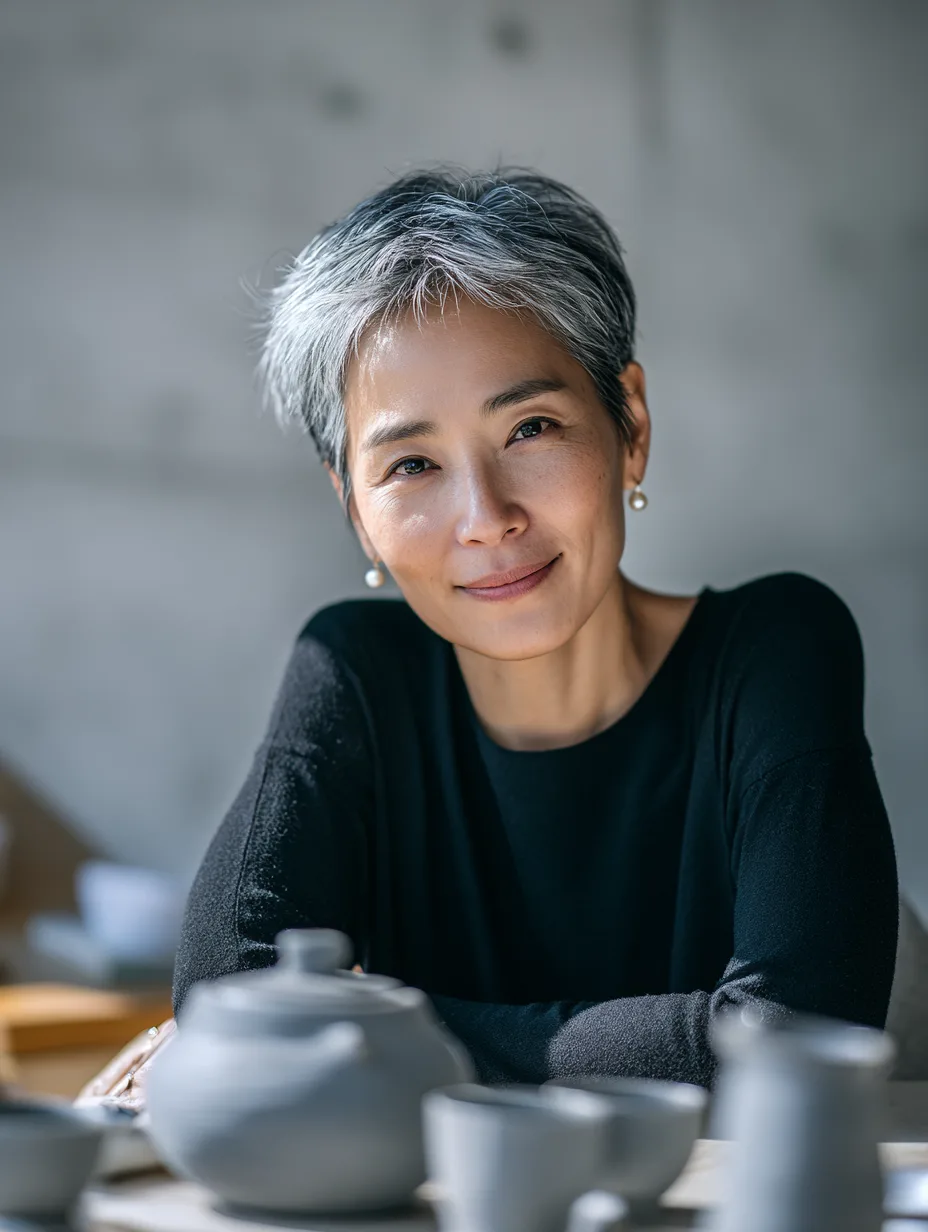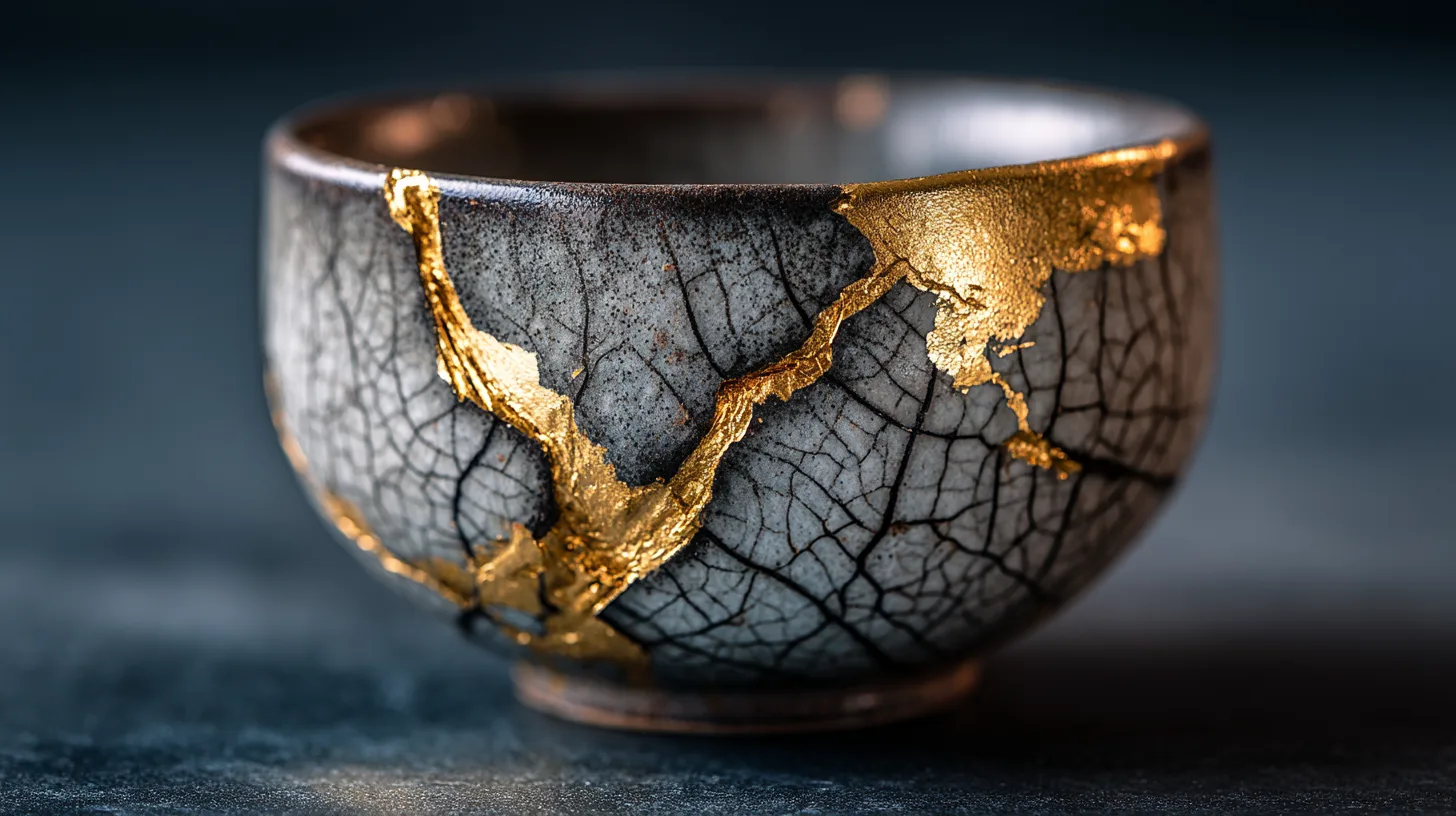
The faux-wood laminate floor of my clinic on Teheran-ro was shockingly cold against my right cheek. It was a Tuesday in November 2010. I had stood up to fetch a paper cup of warm barley tea between sessions. My knees simply ceased to participate in the act of bearing weight. The ceiling tiles blurred, a high-pitched ringing drowned out the traffic noise from the street below, and the next thing I knew I was staring horizontally at a dust bunny under my leather armchair.
My heart battered against my ribs like a trapped bird. I was thirty-two years old. I had defended my PhD at Yonsei University four years earlier, built a waitlisted private practice, and spent my entire waking life running on adrenaline and Americanos. The paramedics who scraped me off the floor were polite. The emergency room doctor at Severance Hospital was not.
He checked my ECG, glanced at my blood work, and sighed. He had the hollow, gray-skinned look of a man who was running on exactly the same fumes I was. He clicked his pen.
"You're the third clinical psychologist we've seen this month," he said, handing me a discharge paper. "Panic attack induced by severe physical exhaustion. Go sleep."
There was no grand revelation. No angelic choir told me to change my ways. Just the humiliating realization that I was a mental health professional who had ignored her own nervous system until it staged a violent coup. I grew up in Gangnam. My parents ran a highly successful hagwon, one of those aggressively lit cram schools where ten-year-olds are drilled in advanced calculus until midnight. Our family business was the manufacturing of high achievers. We sold the promise of flawless test scores, and the price we demanded was childhood.
South Korea operates on a cultural frequency we call ppalli ppalli. Hurry, hurry. It dictates the speed at which we walk, the way food delivery drivers weave dangerously through gridlocked traffic, the speed of our internet, the rhythm of our breathing. We live in a society that treats sleep as a character flaw. There is an old Korean student proverb: Sa-dang-o-rak. Sleep four hours and pass, sleep five hours and fail.
I passed. I passed everything. I was top of my class through middle school, high school, and university. I sprinted through my doctorate. I built my practice with the exact same merciless efficiency. I believed I was immune to biology.
Then I hit the floor.
The Drive System and the Atrophied Animal
We like to pretend that Seoul is a unique pressure cooker, a strange Asian anomaly of overwork. I see this in the faces of Western expats who sit on my couch. They talk about Korean work culture as if it is alien. I usually let them vent for ten minutes before I point out the truth. Seoul is just a slightly louder, neon-lit version of Silicon Valley, London, New York, or Singapore. The global elite everywhere share the exact same religion of optimization. We worship the grind.
To understand why this breaks us, we have to look closely at our evolutionary wiring. After my collapse, I spent time studying Compassion-Focused Therapy in the UK with Paul Gilbert. His model of human emotion is elegant. It bypasses abstract psychological jargon and goes straight to the meat and bone of how we evolved.
Gilbert outlines three basic emotion regulation systems. The Threat system is the oldest. It scans for danger, floods us with cortisol and adrenaline, and readies us to fight or flee. It is angry, anxious, and perfectly designed to keep a primate from being eaten by a leopard. Then we have the Drive system. This releases dopamine. It motivates us to seek resources, to hunt, to gather, to mate, to achieve. It is the system that feels a rush of pleasure when you get a promotion, secure a mate, or see a high grade on a test. Finally, we have the Soothing system. This is tied to the parasympathetic nervous system and oxytocin. It is what allows mammals to rest, to feel safe, to bond with their young, to sleep deeply without keeping one eye open for predators.
A healthy animal cycles through all three. A gazelle runs from a cheetah (Threat), finds food (Drive), and rests in the shade with its herd (Soothing).
Modern high-achievers have hacked this biology with disastrous results. My patients come into my office with a Threat system that has been stuck in the "on" position for decades. They perceive a missed email as a literal threat to their survival. To cope with this constant background terror, they lean entirely into the Drive system. They achieve. They work harder. They buy things. They get another degree.
Their Soothing system is completely atrophied. It is a dead, shriveled muscle.
Take Mr. Park, a forty-four-year-old executive at Samsung who came to me last spring. He sat rigidly on the edge of the sofa. He ground his teeth so violently in his sleep that he had cracked two molars, and his gums bled when he brushed them. He told me he was failing at relaxation. He had downloaded three different meditation apps. He logged his sleep quality on a smart ring. He tracked his resting heart rate.
"I have an eighty-five day streak on my breathing app," he told me, his jaw muscles twitching. "But my jaw still hurts. Should I switch to a different app?"
He was trying to use his Drive system to achieve rest. He was turning stillness into a competitive sport. This is the great illusion of the Western mindfulness boom. Tech companies have taken ancient practices designed to dismantle the ego and repackaged them as productivity tools. We are told to meditate so we can be sharper in the boardroom. We gamify silence. We award digital badges for sitting still. It is absurd.
Then there is Ji-woo. She is sixteen. She is a trainee at an entertainment agency, hoping to debut in a K-pop girl group. The first time she sat in my clinic, she could not stop tapping her collarbone. A rapid, frantic staccato rhythm with her index finger. She weighs her water intake. She counts the milligrams of sodium in a cherry tomato. She sleeps three hours a night because the rest of her time is spent in dance studios and vocal booths, staring at herself in floor-to-ceiling mirrors, absorbing the critiques of managers who tell her she is too round, too slow, too ordinary.
Ji-woo does not know what it feels like to simply inhabit a body without judging it. If I ask her to take a deep breath and notice the sensation of the air in her lungs, she asks me if she is breathing correctly. She wants a grade.
Min-ho is a second-year medical student at my alma mater, Yonsei. He measures his life in fifteen-minute blocks on a color-coded spreadsheet. If he takes a shower that lasts twenty minutes instead of fifteen, he adjusts his sleep schedule to punish himself for the lost five minutes. He sits in my office with dark purple circles under his eyes, smelling of stale coffee and fear. He genuinely believes that if he stops organizing his time this way, he will fail out of school, bring shame to his family, and die penniless.
I look at Mr. Park, Ji-woo, and Min-ho, and I see myself on that freezing laminate floor. I see the exact same broken machinery. We are animals who have forgotten how to lie in the shade.
A Mind Stripped of Metrics
Four months after my trip to the emergency room, I suspended my practice. I packed a single duffel bag and took a train south to Suncheon, then a bus up into the mountains. I spent a year at Songgwangsa, one of the three jewel temples of Korean Seon Buddhism. I was not a particularly devout Buddhist. I just needed a place where no one cared about my PhD.
The first few weeks were physical agony. We woke at three in the morning. The wooden floors of the meditation hall were unforgiving. My knees screamed during the prostrations. But the real torture was the silence. Without my schedule, without my patients, without my endless lists of things to fix and achieve, my mind turned into a cage of starved rats. I obsessed over what my colleagues were doing in Seoul. I planned imaginary research papers. I calculated how much money I was losing by being there.
I was using my time at the monastery as another project. I wanted to be the best meditating monk-in-training they had ever seen. I wanted to optimize my enlightenment.
The head monk at the time was an older man named Beopjeong Sunim. He was small, frail-looking, but moved with a terrifyingly quiet economy of motion. He never wasted a gesture. One morning in late autumn, I was sweeping the courtyard outside the main hall. I was sweeping furiously. I wanted the courtyard to be immaculate. I was attacking the fallen ginkgo leaves with a bamboo broom, gathering them into mathematically precise piles.
Beopjeong Sunim stopped walking and watched me for a long time. I swept harder, wanting him to notice my diligence.
He stepped forward, took the broom from my hands, and scattered the pile of leaves I had just made. A gust of mountain wind blew them across the dirt.
"You are fighting the leaves," he said quietly. "You are trying to win against the autumn."
I stood there, panting, my hands blistered from the broom handle. I felt a sudden, hot flash of anger. I had spent an hour gathering those leaves.
He looked at my tight shoulders, my clenched jaw. He saw right through the Gangnam overachiever who had dragged her burnout up a mountain in hopes of curing it like a math problem.
"Dr. Chun," he said, using my title deliberately. "You have spent your whole life trying to become someone. Try, just once, to simply be."
He handed the broom back to me and walked away.
I stood alone in the cold morning air. The leaves rustled around my ankles. I dropped the broom. I sat down on the wooden steps of the hall and cried. I wept with the ugly, snot-nosed intensity of a child. I cried for the ten-year-old girl in the hagwon who drank black tea to stay awake. I cried for the university student who threw up in library bathrooms from stress. I cried for the thirty-two-year-old woman who collapsed on the floor of her own clinic.
That morning at Songgwangsa was the first time my Soothing system came online in twenty years. It felt like warm water washing out a dirty glass. It felt terrifying. When you stop sprinting, you finally have to look at the scenery, and sometimes the scenery is bleak.
Seon Buddhism is drastically different from the sanitized mindfulness sold in digital subscriptions. It does not promise you will feel better. It does not offer a return on investment. It demands that you strip away the metrics by which you have measured your entire existence. You sit on a cushion, facing a wall, and you watch your ego scream for relevance. You let it scream. You do not analyze the scream. You do not try to fix the scream. You just watch it, until the ego gets tired and goes to sleep.
I stayed at the temple for a year. I learned the physical mechanics of rest. I learned how to let my belly expand when I breathed, instead of holding it tight from vanity and tension. I learned how to drink tea without thinking about what I was going to do after I finished the tea. I learned that the world does not end when I am entirely useless.
I came back to Seoul and reopened my practice. I refuse to give neat, cinematic endings to my patients, and I will not give one here. I am forty-six now. I am still a Korean woman living in the epicenter of ppalli ppalli. The sirens still wail outside my office window. The delivery scooters still scream down the avenues. My patients still walk in carrying the heavy, invisible boulders of their parents' expectations.
I still struggle. Last week, I caught myself trying to reply to three patient emails while eating a bowl of cold noodles over my kitchen sink. I felt the familiar tightening in my chest. The Threat system flaring up. The Drive system kicking into gear to manage the threat. It is a neurological groove dug so deep into my brain over decades that I will default to it the moment I stop paying attention.
But the difference now is the catch. I caught myself.
I put the phone face down on the counter. I looked at the noodles. I took a breath. I deliberately brought the Soothing system online. I lowered my shoulders. I felt the soles of my feet against the floor. I ate the food.
We are not trying to eradicate the drive. The drive is beautiful sometimes. It builds hospitals, it writes symphonies, it cures diseases, it gets the K-pop trainee through the audition, it puts the Samsung executive at the head of the table. But a car with a massive engine and no brakes will eventually kill the driver.
My work now is helping people find their brakes. When Min-ho, the med student, takes out his color-coded spreadsheet, I gently push it across the desk, back toward him. I ask him to take off his watch. I ask him to tell me what his hands feel like. I ask him to describe the texture of the fabric on the couch. He hates it at first. He squirms. His brain is screaming at him that this is unproductive.
I just sit with him. I offer him a nervous system that is not currently in a state of emergency. Mammals regulate each other. If I sit in my chair, soft and grounded, breathing slowly, his mirror neurons will eventually catch the rhythm. He will stop vibrating. The deep, heavy sigh will come. The shoulders will drop.
It is exhausting work. It requires an honesty I do not always want to give. Sometimes, late in the afternoon, when the winter light fades over Teheran-ro and my office gets dark, I look down at that faux-wood floor. I remember the dust bunny. I remember the cold. I run my thumb over the ceramic edge of my teacup, feeling the rough grain of the clay, quite happy to be sitting upright, quite happy to just be.